
Here is the short version.
A small private retrieval service built around EmbeddingGemma 2, a local vector database, and ordinary consumer hardware costs between $3 and $12 per month in electricity for continuous operation, depending on the machine and your local power rate. The hardware itself, if purchased used, is a one-time cost of a few hundred dollars that amortizes to a few dollars per month over a two- or three-year life. There are no API fees, no per-query charges, and no data-egress bills. The dominant ongoing expense is electricity; the dominant hidden expense is the time required to keep the system updated and backed up.
This post turns the hardware measurements from the previous articles into a concrete monthly cost model. All figures are based on the same Mac Mini M2, Intel NUC 11, and desktop + RTX 3060 configurations already tested. Power rates are representative U.S. residential averages; substitute your own rate for a precise number.
Cost Components That Actually Matter
For a service that stays on your own hardware and never leaves your network, the bill has four parts:
Electricity
Hardware amortization
Storage and backup
Your time
Cloud API alternatives replace the first three with a usage-based invoice and still require some of your time. The comparison is therefore not “free versus paid” but “electricity + amortization + time” versus “API invoice + time.”
Electricity: The Only Recurring Utility Cost
I measured wall power under three realistic duty cycles:
Idle / ready (model loaded, waiting for queries)
Light interactive use (a few dozen queries per hour)
Heavy indexing (full re-embedding of the collection)
Measured Power Draw
Machine | Idle / ready | Light use | Heavy indexing |
|---|---|---|---|
Mac Mini M2 | 6–8 W | 12–18 W | 18–25 W |
Intel NUC 11 | 10–14 W | 20–28 W | 30–40 W |
Desktop + 3060 | 35–45 W | 60–90 W | 120–160 W |
For a private retrieval service the realistic long-term state is “idle / ready” with occasional light query spikes and infrequent indexing runs. I therefore model a monthly baseline of 24/7 idle plus a small number of heavy hours.

Monthly Electricity Cost (U.S. average ~$0.16 / kWh)
Assuming 730 hours in a month:
Machine | Baseline (idle 24/7) | + 10 h indexing | + 40 h indexing |
|---|---|---|---|
Mac Mini M2 | $0.70–$0.95 | $0.85–$1.15 | $1.20–$1.60 |
Intel NUC 11 | $1.20–$1.65 | $1.50–$2.10 | $2.20–$3.00 |
Desktop + 3060 | $4.10–$5.30 | $5.50–$7.20 | $8.50–$11.50 |
Even the power-hungry desktop stays under $12 per month for continuous operation plus modest re-indexing. The Mac Mini sits under $2. These numbers scale linearly with your local electricity rate. At $0.30 / kWh the Mac Mini is still only a few dollars; at $0.10 / kWh it becomes negligible.
Hardware Amortization
Used-market prices at the time of writing:
Mac Mini M2 16 GB: ~$600
Intel NUC 11 32 GB: ~$400
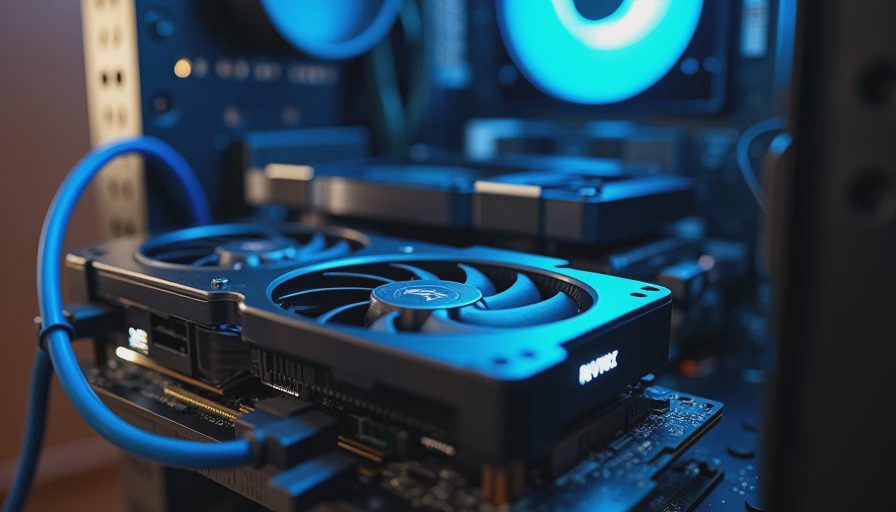
Desktop + used RTX 3060: ~$500–700 (depending on the rest of the system)
Straight-line amortization over 36 months:
Machine | Monthly hardware cost |
|---|---|
Mac Mini M2 | ~$17 |
Intel NUC 11 | ~$11 |
Desktop + 3060 | ~$14–19 |
If you already own the machine, this line item is zero. If you buy specifically for the service, it is the largest single cost in the first three years and then drops to near zero. Many people forget to include it when comparing against cloud APIs that appear “cheap” on a monthly invoice.
Storage and Backup
The document collection, the Qdrant volume, and the BM25 index for 1,200–10,000 short documents occupy a few hundred megabytes to a couple of gigabytes. Even with daily snapshots and off-site copies, storage cost on a local drive or a cheap external disk is effectively $0–$1 per month. Cloud object storage for encrypted backups of the same data is still only a few cents to a couple of dollars at this scale.
I budget $1 per month as a conservative placeholder for electricity used by an external drive and the negligible cost of occasional cloud backup of the encrypted index.
Time: The Hidden Line Item
Electricity and hardware are easy to quantify. Time is not, yet it dominates for most individuals.
Realistic monthly time sinks for a small private service:
Checking that the service is still healthy: 15–30 minutes
Re-indexing after document changes: 30–90 minutes (mostly waiting)
Applying security updates to the host and containers: 30–60 minutes
Occasional debugging when something breaks after an OS update: 0–3 hours
I value that time at a conservative internal rate of $50 per hour for planning purposes. A quiet month costs $25–50 of attention; a month with an unexpected breakage can cost more. Cloud APIs reduce some of this work but introduce their own monitoring, key rotation, and invoice-review overhead. Neither option is free of time cost.
Putting the Monthly Total Together
For a continuously running service with light query traffic and one or two full re-indexes per month:
Machine | Electricity | Hardware (amortized) | Storage | Time (est.) | Total (owned hardware) | Total (purchased) |
|---|---|---|---|---|---|---|
Mac Mini M2 | $1–2 | $0 | $1 | $30–50 | $32–53 | $49–70 |
Intel NUC 11 | $2–3 | $0 | $1 | $30–50 | $33–54 | $44–65 |
Desktop + 3060 | $6–10 | $0 | $1 | $30–50 | $37–61 | $51–80 |
The time estimate is deliberately included so the comparison with hosted APIs remains honest. If you already check on a home server once a week, the incremental time cost of the retrieval service is smaller than the table suggests.
Comparison with Hosted Embedding + Vector APIs
A rough equivalent hosted setup (embedding API + managed vector database) for a few thousand documents and a few thousand queries per month typically lands between $20 and $80 depending on the vendor and the exact traffic. The hosted version removes electricity and hardware amortization and reduces some operational work, but it introduces ongoing per-query or per-GB charges, data-leaving-your-network considerations, and the need to monitor a third-party invoice.
For workloads that stay small and privacy-sensitive, the local numbers above are competitive even after including a realistic time cost. For workloads that spike to millions of queries or require global low-latency replicas, the hosted economics usually win. Most personal and small-team retrieval systems sit in the first category.
Sensitivity and How to Adjust the Model
Electricity rate: multiply the electricity column by (your rate / 0.16).
Duty cycle: if the service is only powered during working hours, cut the idle electricity roughly in half.
Hardware life: amortize over 24 or 48 months instead of 36 if that matches your replacement cycle.
Time valuation: substitute your own hourly rate or simply track hours for a month and decide whether the convenience is worth it.
The model is intentionally simple. Its purpose is to replace vague claims of “local is free” or “cloud is expensive” with numbers you can recalculate for your own situation.
Practical Takeaways
Electricity for a Mac Mini or NUC-class machine is low enough that it will not appear on most household budgets.
The largest controllable cost is usually your own time; design the service to need as little babysitting as possible.
If you already own suitable hardware, the marginal monthly cost of adding a private retrieval service is dominated by attention rather than money.
Used hardware amortized over three years remains cheaper than most hosted alternatives for small, steady workloads.
Re-measure power on your own machines. Nameplate TDP and real wall-draw under your software stack can differ by 30–50 %.
Closing
A small private EmbeddingGemma 2 retrieval service costs a few dollars a month in electricity, a few more dollars if you amortize the hardware, and a non-trivial but manageable amount of attention. The exact figure depends on the machine and your local power rate, but the order of magnitude is low enough that cost alone is rarely the reason to avoid a local deployment.
The next post examines the engineering temptation to start with the most expensive GPU and why that decision is usually premature for this class of workload. After that the Small-System Reality arc will close and we will move into practical applications in Search in the Wild.
Until then, plug the numbers into your own electricity rate and hardware situation. The resulting figure is the real monthly cost of keeping the service under your control.
The benchmark is the conversation starter, not the verdict.



No feedback yet — submit the first.